
Stone Chimney Problems in Edinburgh: Expert Guide to Repairs and Rebuilds
(For Illustrative Purposes Only)
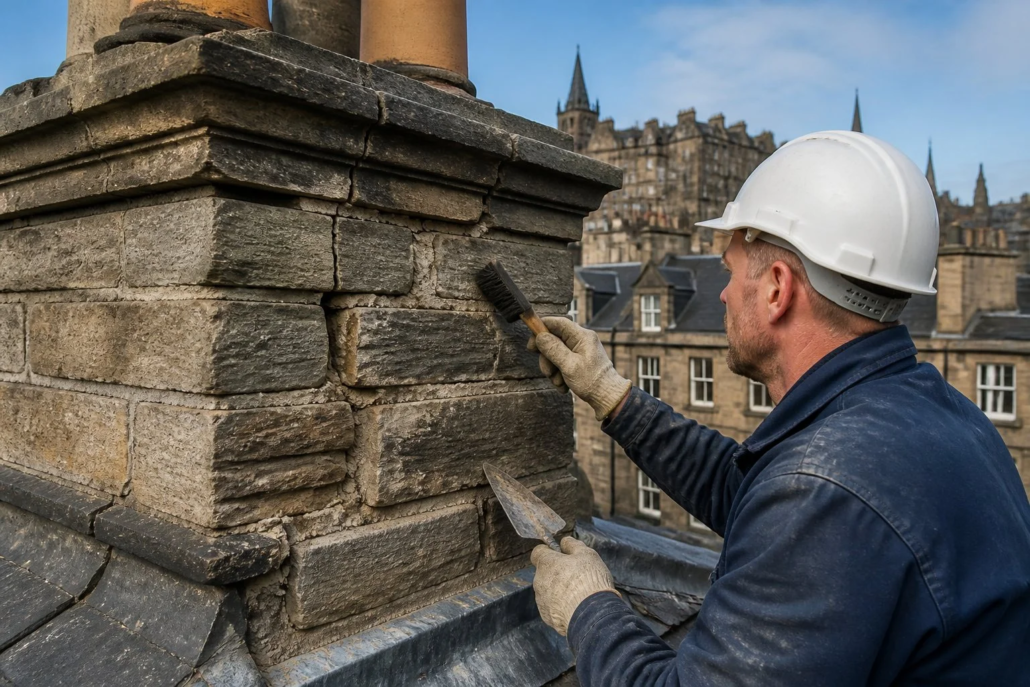
Stone chimneys in Edinburgh take a beating from wind, rain, and the relentless march of time. You need the right fix to keep your home safe.
A quick repoint can stop leaks and buy you years, but heavy stone loss, wobbly stacks, or crumbling mortar often mean you’re looking at a strip and rebuild.
If it’s mostly the mortar joints, repointing usually does the trick. But if stones are badly eroded or the stack’s unstable, a full rebuild is the safer long-term bet.
Surveyors check chimneys, spot common problems on Edinburgh stacks, and weigh up heritage rules and traditional materials before recommending repairs.
Knowing what they look for helps you decide between repair, repointing, or strip-and-rebuild, and it’s key to finding trusted chimney repairs in Edinburgh who follow the right standards.
Typical Issues with Edinburgh’s Stone Chimneys
(For Illustrative Purposes Only)
Weathering and Stone Decay
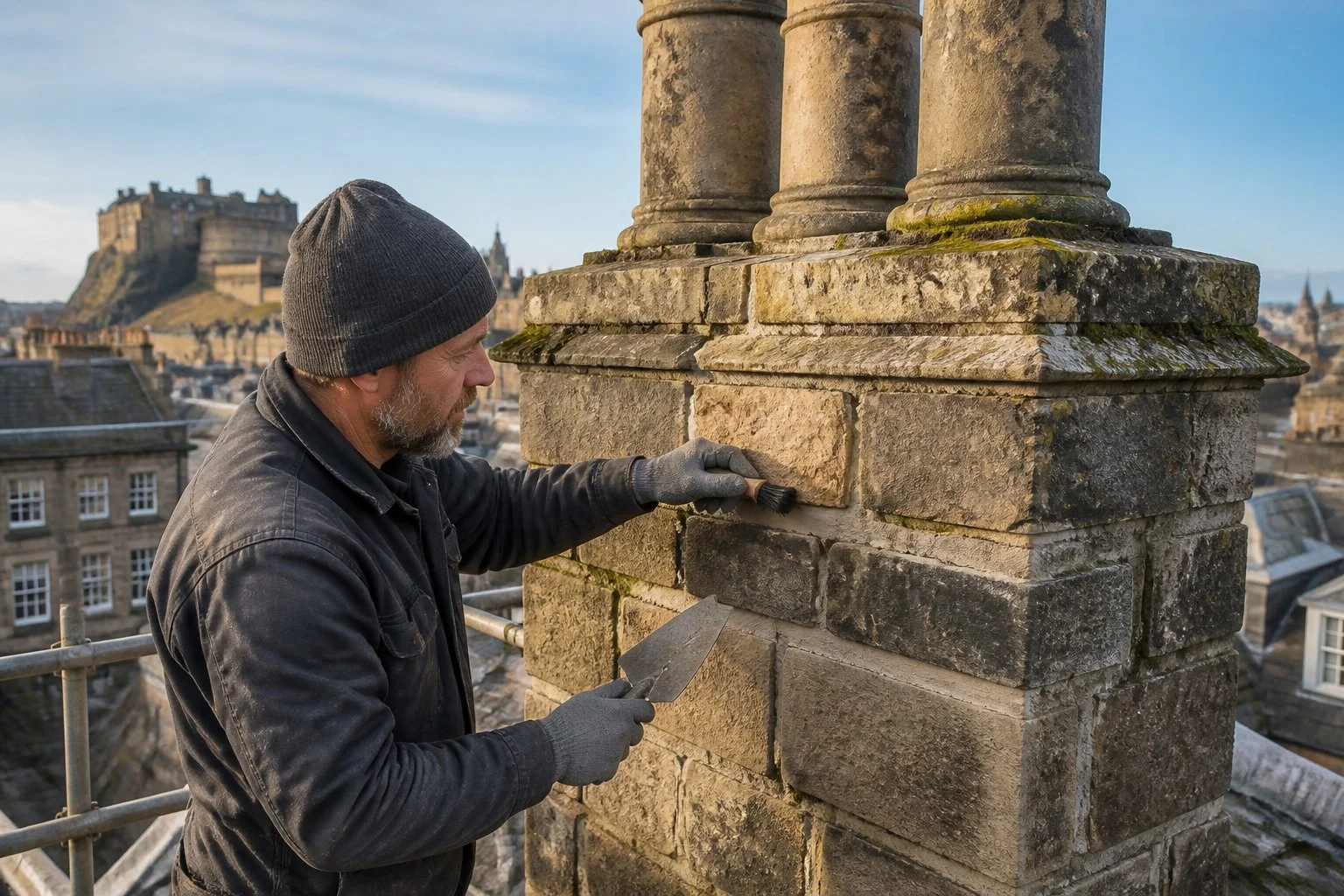
Edinburgh’s sandstone gets battered by wind, rain, and freeze–thaw cycles. Over time, the stone surface softens and wears away, and mortar joints weaken.
This really stands out on exposed stacks in places like Grange, Morningside, and parts of EH9 and EH10, where rain hits from all sides. Spalling pops up when trapped moisture freezes and flakes the stone face.
Hard cement repairs can make things worse by trapping moisture, so lime mortar and matching stone repairs are a must. A heritage stonemason in Edinburgh checks the grain, tool marks, and colour before replacing or fixing stonework.
Common Signs of Structural Damage
Cracks running through stacks, stepped or leaning courses, and loose chimney pots all scream structural trouble. Movement can come from thermal expansion, roof settling, or bad old repairs.
In EH1–EH3 tenements, rising cracks at party wall junctions are common, while detached properties in EH13 often show movement at lead flashings. Watch for vertical and diagonal cracks, missing mortar, and stones sticking out of the joint.
If you spot a bulging or leaning stack, get an Edinburgh stonemason out fast. Sometimes, only a partial strip-and-rebuild will sort out weathered stone and failing mortar when they can’t hold things together anymore.
Damp and Water Ingress Risks
Water getting in causes internal damp, rots timber collars, and can wreck plaster and ceilings below. Blocked or badly fitted cowls, failed lead flashing, and broken pots let rain and birds’ nests keep things wet.
You’ll spot dampness as dark stains, salt rings on stone, or wet patches on the ceiling. In sandstone chimneys, trapped moisture speeds up stone decay and freeze–thaw spalling.
Using breathable lime mortar and proper leadwork (Code 4/5 if needed) helps moisture escape and protects your stonework. If you see damp, ask for a CCTV flue check and a roof-level inspection.
Assessment and Chimney Survey Processes
(For Illustrative Purposes Only)
Chimney Inspection Techniques
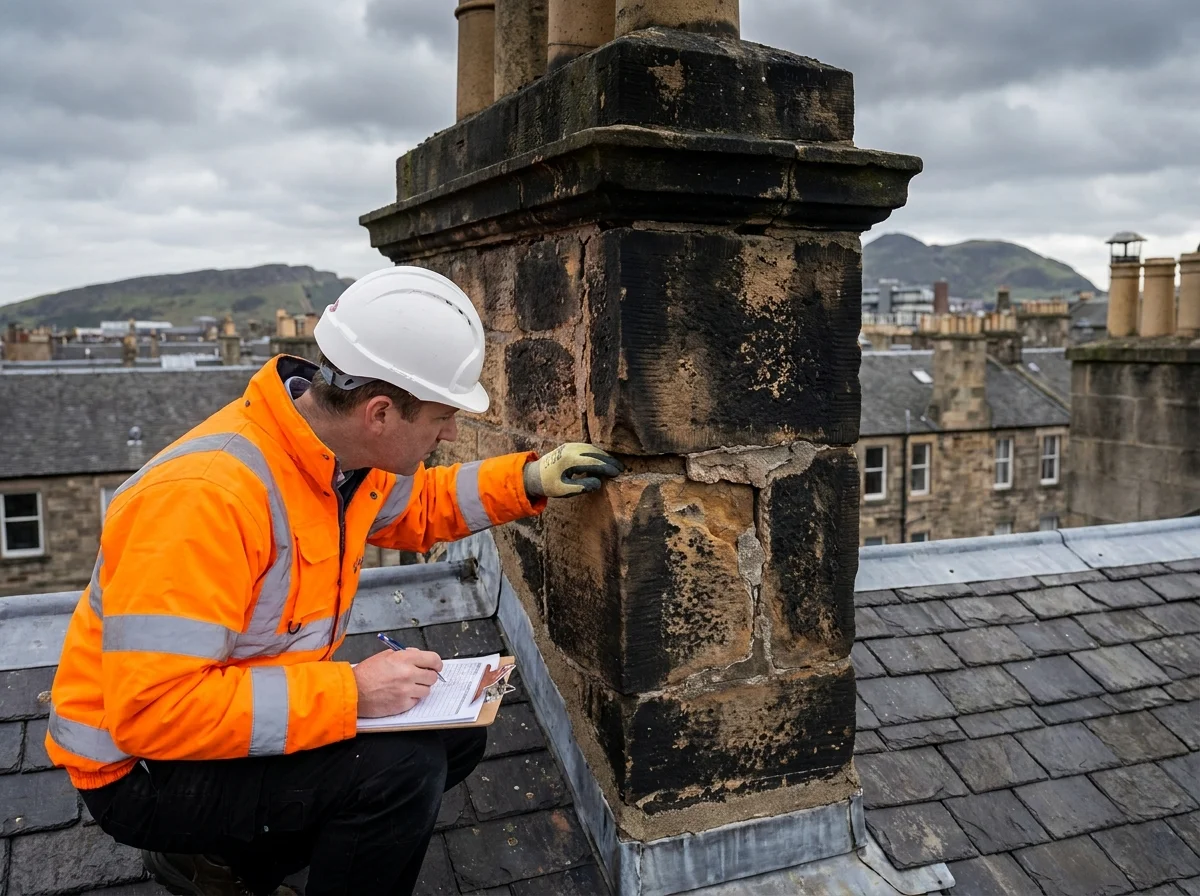
A chimney specialist starts with a visual roof-level check to spot loose stones, cracked pots, and failed mortar. They’ll look at flaunching, leadwork, and chimney pots from every angle, using ladders or scaffolding for a close-up.
For taller or trickier stacks, rope access or a cherry picker gets them right up to the joints and stone faces. Inside, they’ll check for smoke stains, soot, and any water marks on ceilings or in the attic.
Identifying Repointing vs. Rebuild Needs
The inspector checks if the mortar loss is local or all over. If joints have just minor erosion and the stones look sound, repointing is usually the call to keep water out.
Repointing means swapping out failed lime (or the right mortar mix) and patching small cracks around pots or flashing. But if stones are cracked, the stack leans, or core masonry is shot, a full chimney rebuild is the only way forward.
Documenting Masonry and Flashing Defects
Good surveys come with labelled photos, a defect log, and a list of recommended actions, prioritised. Inspectors map out issues like the following:
- missing mortar joints,
- spalled or cracked stones,
- failed launching,
- and dodgy lead flashing or rainwater entry points
Reports list urgent safety issues first, then maintenance needs and longer-term options like partial or full rebuilds. They’ll say who’s doing the repairs or repointing and mention if you’ll need specialist access or scaffolding.
Choosing the Correct Repair Method
Repointing with Lime Mortar

(For Illustrative Purposes Only)
If your mortar joints are eroded, cracked, or missing, repointing with lime mortar usually sorts it. Lime lets damp escape and moves with the building.
Use traditional lime mortar, not cement, on Edinburgh’s period properties and tenements to match the old look and avoid trapping moisture.
A good repointing job means raking out old, hard cement or failed mortar to the right depth, cleaning joints, and applying a lime mix that matches the original.
Stone and Masonry Repairs
Fix individual stones when cracks, spalls, or loose bits affect the stack, but it’s still solid overall. Stone repairs might mean pinning, resin fixes, partial stone replacement, or sorting lead flashings at the base.
Always use matching stone and compatible lime mortar to keep the strength and looks. Skilled masons can also fix chimney pots, capping, and leadwork.
If you notice movement, mortar loss on one side, or hairline cracks, get a masonry inspection.
When a Full Chimney Rebuild Is Necessary
Go for a full chimney rebuild when the stack leans, has big stone loss, or mortar has failed top to bottom. Rebuilds start with a survey, often using rope access or scaffolding, and might be needed after storms or years of erosion.
A strip and rebuild gives you a new, stable stack with the right lime mortar and matching stone. You can also fix internal problems, like unsafe flues or dodgy flashing, during a rebuild.
Heritage Considerations and Materials
Why Use Traditional Lime Mortar?
Go for breathable lime mortar instead of cement. Lime lets moisture escape from sandstone chimneys and stops trapped damp from causing spalling and frost damage.
It also flexes with old masonry, so joints don’t crack and stones don’t split. Choose a mortar mix that matches the original in colour, texture, and strength.
Hydraulic and non-hydraulic lime types act differently; a heritage stonemason in Edinburgh will test samples and pick the right blend.
Best Practices for Restoring Period Properties
Start with a careful chimney survey: check pots, flashings, mortar, and any loose stones. Take photos and simple notes to show your stonemason or the conservation officer.
Small repairs usually mean lime repointing and resetting loose stones, not a full rebuild. Use traditional techniques, hand-rake old joints, use compatible lime mortar, and match pointing profiles.
Protect nearby roof coverings and keep scaffold fixings minimal.
Working with Sandstone and Listed Buildings

(For Illustrative Purposes Only)
Sandstone chimneys are everywhere in Edinburgh tenements and need a gentle touch. Skip abrasive cleaning or hard cement repairs; they’ll just erode the grain and change the colour.
If you have to replace stone, find a close match in type, grain, and tooling for an authentic look. If your chimney’s listed, talk to the local conservation officer early. You’ll often need approval for material changes, repointing, or a strip and rebuild.
Frequently Asked Questions
How can I tell whether my chimney needs repointing, localised repair, or a full rebuild?
If mortar joints are crumbling or missing in spots, you probably just need repointing to keep water out. Repointing works if the stone and stack are straight and the damage sticks to the joints.
If stones are cracked, loose, or missing, or flashing and pots are damaged, you’re looking at local repairs to replace stones or secure fittings. Local fixes work for chimneys with stable cores but specific problem areas.
What are the common signs of failing mortar and loose masonry on stone chimneys?
Look for gaps, powdery mortar, and joints that wash out after rain. Those signs mean the mortar’s breaking down and water’s getting in.
Tap stones; if they move or if you see cracks through stone faces and wobbly chimney pots, you’ve got loose masonry and a higher risk of collapse.
In the loft or on upper walls, watch for damp patches, mould, or water stains near the chimney. Water tracks from the stack often point to failed mortar or dodgy flashing.
When is it safer to strip and rebuild a chimney rather than make patch repairs?
If your chimney leans, has large vertical cracks, or keeps losing mortar along most of the stack, it’s probably time to strip and rebuild. Those signs tell you the structure just can’t carry loads safely anymore.
Go for a rebuild if repairs keep failing or the chimney risks falling on people or damaging property below. Rebuilding lets you get rid of hidden issues and brings back proper strength.
How does Edinburgh’s weather affect the lifespan of stone chimney masonry and pointing?
Freeze–thaw cycles and all that rain push water into joints and stone pores. When it freezes, the water expands, and cracks widen, so mortar erodes and the stone starts to spall.
If you’re near the coast, salt in the sea air can speed up decay on exposed stone and metal flashings. Wind and driving rain also eat away at mortar, especially on exposed roofs and old tenement stacks.
Lime mortar breathes better than modern cement mixes, and it just suits historic stonework.
Do I need a chimney inspection or structural assessment before arranging works?
Yes, you do. Start with a professional chimney inspection to check the mortar, stone stability, flashing, pots, and access.
This inspection helps you figure out if you need repointing, a local repair, or a full rebuild.
If your stack leans or shows large cracks, or you think there’s a problem with the cavity or internal flue, ask for a structural assessment.

 Heritage Masonry Edinburgh
 Heritage Masonry Edinburgh
