
Lime Mortar vs Cement: Protecting Edinburgh’s Historic Buildings
(For Illustrative Purposes Only)
If you own an old Edinburgh stone building, using modern cement for repairs can lock moisture into the walls, stiffen the joints, and cause damage that starts small but gets worse over time. Pick lime mortar instead and you let the building breathe, move gently, and avoid the costly decay cement can bring.
This article digs into why cement harms traditional stonework, how lime mortar matches Edinburgh’s climate and materials, and what smart repairs look like. You’ll get a clearer sense of how to protect your property and its value.
Key Differences Between Lime Mortar and Cement Mortar

(For Illustrative Purposes Only)
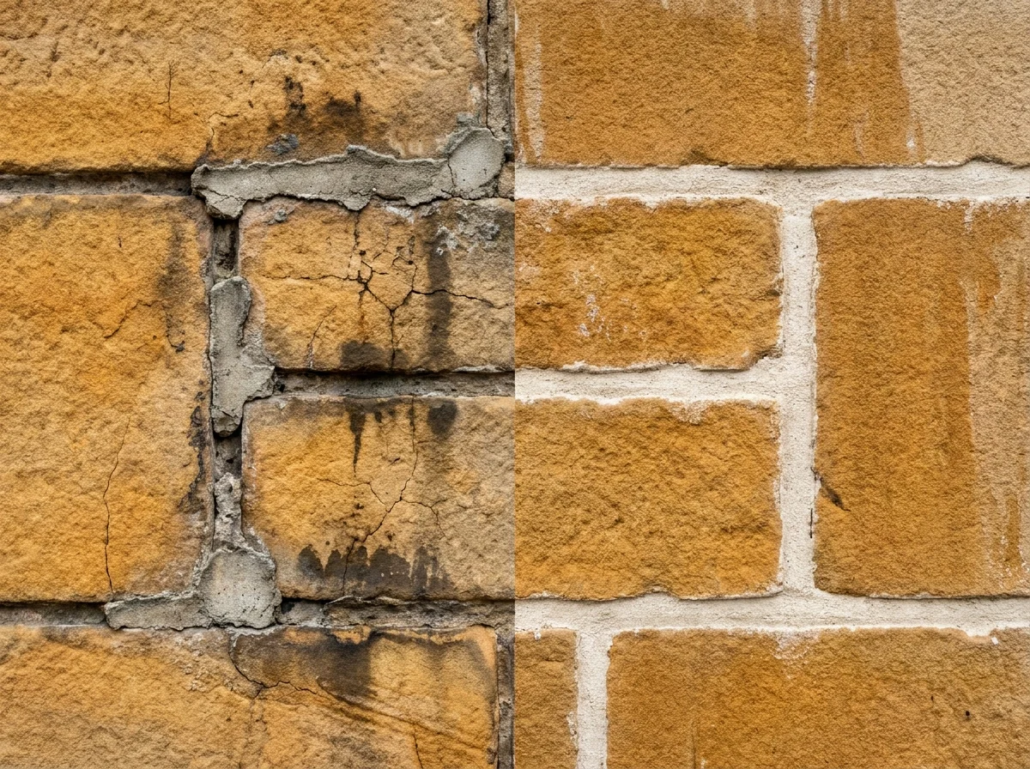
Close-up view of old sandstone bricks with lime mortar on one side and cement mortar on the other, showing differences in texture and condition.
You should know how each mortar works, how it moves moisture, its strength and flexibility, and whether it suits older brick and stone. These details really decide long-term damage and maintenance needs for your Edinburgh building.
Composition and Setting Mechanisms
Lime mortar uses lime (calcium hydroxide or hydrated lime) mixed with sand. It sets by carbonation, slowly absorbing carbon dioxide from the air and turning back into calcium carbonate.
This process takes time, so lime mortar stays workable longer and cures slowly. Cement mortar usually contains Portland cement, sand, and water. It sets by a chemical hydration reaction that hardens quickly.
That fast cure gives early strength but makes the joint much harder and less forgiving. Lime comes as natural hydraulic lime (sets faster, with some hydraulic properties) or traditional lime (mainly depends on carbonation).
Breathability and Moisture Movement
Lime mortar is more breathable than cement mortar. It lets water vapour pass through joints, so moisture in old stone or soft brick can evaporate out.
This reduces trapped damp and salt damage in historic walls. Cement mortar is far less permeable and tends to trap moisture because it doesn’t pass vapour as easily.
In older buildings with soft materials, using cement mortar can force moisture into the masonry, which leads to spalling, frost damage, and salt crystallisation. For Edinburgh’s old buildings, breathability is crucial where traditional materials and damp cycles are part of the picture.
Compressive Strength and Flexibility
Cement mortar has much higher compressive strength than lime mortar, especially early on. That’s great for modern structural work and engineering bricks where high strength matters.
Lime mortar is weaker in compressive strength but more flexible and sacrificial. It absorbs small movements and thermal expansion without cracking the brick or stone.
If you use stiff cement mortar on flexible old walls, the bricks can crack before the mortar does. You want mortar strength to match the masonry; stronger isn’t always better for old fabric.
Compatibility with Traditional and Modern Masonry
Traditional lime mortar fits soft, porous materials like Victorian brick, sandstone, and lime-based plaster. It matches the physical and chemical behaviour of older buildings.
Lime reduces the risk of long-term damage and keeps repairs reversible. Cement mortar suits modern bricks and engineering bricks that are denser and stronger.
These materials can handle cement’s hardness and low permeability. Avoid cement on historic masonry because it creates a mismatch in stiffness and moisture movement. If you’re unsure, test a small patch before deciding.
Moisture Management and Breathability in Edinburgh’s Stone Buildings
(For Illustrative Purposes Only)
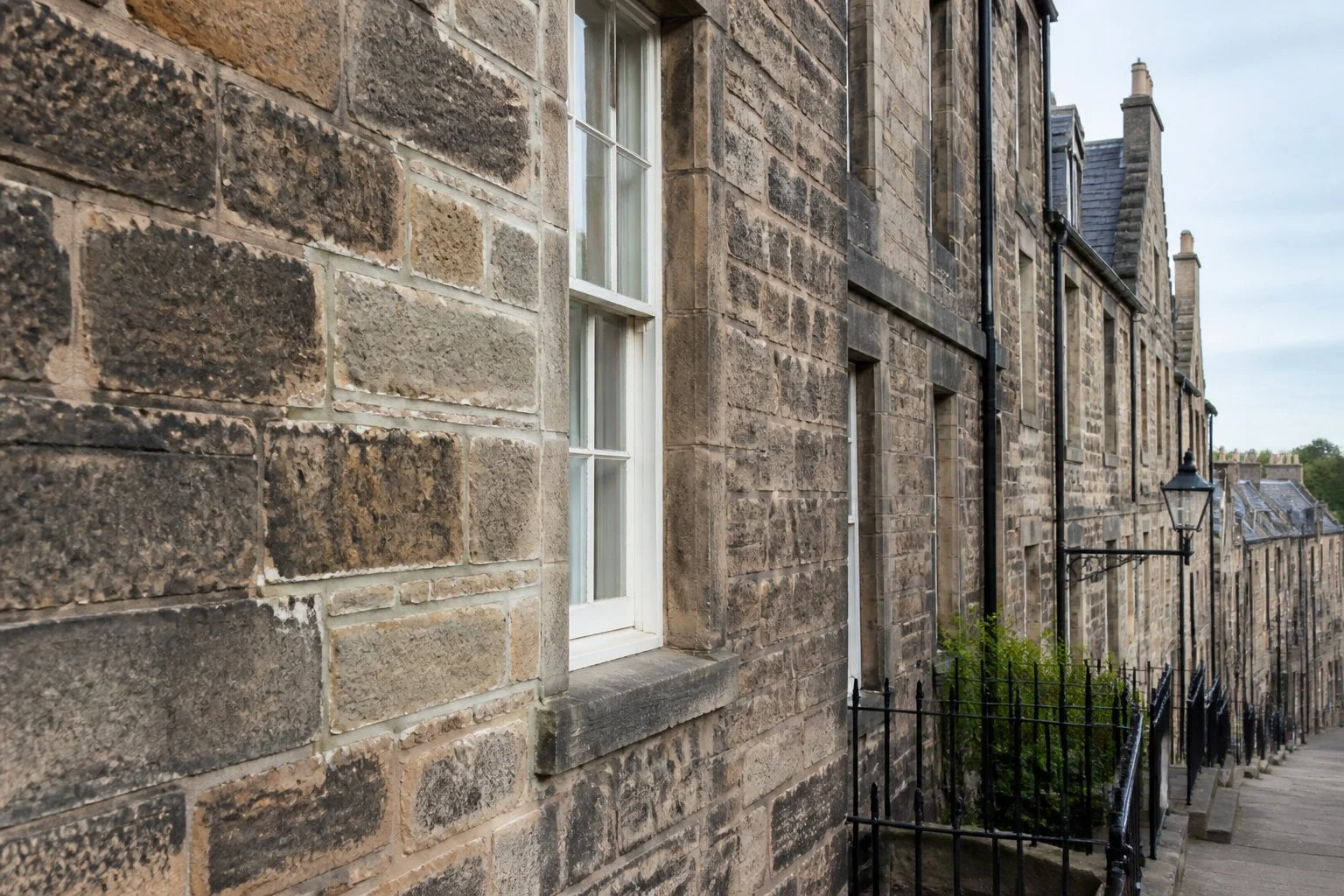
Close-up view of traditional Edinburgh stone buildings showing weathered stone walls and different types of mortar in the joints.
Edinburgh’s older stone buildings rely on breathable materials and controlled moisture movement to stay sound. You need mortar that lets moisture escape, protects soft masonry, and doesn’t force water into the stone.
Risks of Trapped Moisture
Cement mortar is much less permeable than traditional lime. When you swap out breathable joints for cement on a solid stone wall, rainwater that once evaporated through the mortar now gets forced into the stone instead.
That trapped moisture soaks deeper and lingers, making freeze-thaw stress worse in winter. Your stone and older bricks usually have less strength than modern engineering units.
If moisture gets trapped, salt crystallisation and repeated freezing can crack and flake the stone face. You’ll often see damage next to cement-repointed joints first.
Lime mortar lets vapour move out through the joints. That keeps the wall’s natural drying routes open and lowers the risk of long-term moisture build-up.
Internal Damp and Spalling Issues
When the wall can’t breathe, moisture finds the easiest path, often inward. You might see higher internal humidity, tide marks on plaster, or mould in north-facing rooms after wet weather.
These are signs that moisture is moving through the masonry instead of evaporating out. Spalling happens when moisture in the stone freezes, or salts expand.
You’ll notice flakes or layers coming off the outer face, especially on softer sandstone around Edinburgh. Cement joints make this worse because they’re rigid and bond tightly; taking them out later often pulls stone with the mortar.
For moisture management, match mortar permeability to your stone. That helps keep internal damp down, prevents spalling, and lets you do future repairs without damaging the masonry further.
Why Mortar Choice Matters for Heritage and Listed Properties

(For Illustrative Purposes Only)
Choosing the right mortar affects the building’s physical health, its legal status, and the long-term cost of repairs. Using lime or cement changes how moisture moves, how the wall flexes, and whether local conservation rules allow the work.
Understanding Traditional Masonry Needs
Traditional masonry in Edinburgh often uses softer stone and historic brick that need a breathable, flexible mortar. Lime mortar absorbs and releases moisture slowly.
This prevents trapped damp in stone or brick and reduces salt build-up that can flake surfaces. Cement mortar is hard and less permeable.
When you use it on a period property, moisture can get forced into the surrounding masonry instead of through the joints. That causes internal decay, surface spalling, and loss of original fabric.
Match mortar compressive strength and porosity to the existing wall. Heritage repointing aims to protect original mortar joints and let the building move slightly with temperature and settlement. Using lime keeps these behaviours intact.
Legal and Conservation Requirements
If your building is listed or inside a conservation area, you’ll need listed building consent before repointing. Local planning authorities and conservation officers usually require lime mortar for heritage properties.
The Society for the Protection of Ancient Buildings and Historic Environment Scotland both recommend using compatible materials. If you use cement without consent, you could face enforcement and have to remove the cement and redo the work with an approved lime mix.
That bumps up costs and can hurt the building’s official status or grant eligibility. Keep documentation for your specification, testing, and chosen mix. Show this to your conservation officer to make sure your work meets statutory and best-practice standards.
Consequences of Using Incompatible Mortar
Incompatible mortar leads to physical damage, visual loss, and higher repair bills. Cement joints often crack and detach as the wall moves, leaving open gaps that speed decay.
Hard cement can make adjacent softer stone crack or erode under stress. Moisture trapped by cement causes salts to crystallise in the masonry, producing flaking and deeper loss of original material.
Over time, you might need stone replacement rather than simple repointing, which is more invasive and costly. Inappropriate repairs can also damage the building’s heritage value. Grants and insurance claims can take a hit if work breaks conservation rules. Picking the right mortar protects both the structure and your legal standing.
Best Practices for Stone Restoration and Repointing

(For Illustrative Purposes Only)
Focus on matching mortar to the stone, using breathable lime mortars where original fabric needs it, and employing careful, phased repointing methods. Avoid hard cement mixes that trap moisture and always try test mixes before committing to a full repair.
Choosing the Correct Mortar Specification
You need to match the mortar to the stone type, joint width, and exposure. For most pre-1919 Edinburgh stonework, choose a lime mortar with the right hydraulic content (NHL 2 or NHL 3.5 as needed) instead of modern Portland cement.
Test small areas first to check colour, texture, and compressive behaviour. Specify aggregate type and grading to match original mortar texture. Include a sample panel in the contract and require moist curing and proper drying times.
Document the specification: binder type, binder-to-aggregate ratio, water content, and any pozzolans. This helps avoid on-site substitutions that don’t fit.
Methods for Lime Mortar Repointing
Remove failed mortar by hand or with low-impact tools to avoid damaging stone edges. Cut back joints to a consistent depth, usually at least twice the joint width, and clean out dust and salts before repointing.
Use pre-mixed or site-batched lime mortar that’s matured before use. Dampen joints and compact the mortar in thin layers, letting each layer carbonate or set properly.
Finish joints to match the original profile and protect new work from frost and rapid drying for 7–14 days. Record methods and materials for future maintenance.
Pitfalls of Cement Repointing
Cement mortar is harder and less permeable than traditional lime mixes. When you use it on old stone, it can trap moisture in the masonry, force water into the stone, and cause cracking, spalling, or accelerated decay.
Cement also bonds more strongly than soft historic stone, so repairs can fracture stone edges during freeze–thaw. Avoid cement for through-penetration repairs, narrow joints on soft sandstone, and buildings designed to “breathe”.
If cement is absolutely necessary on modern inserts or structural repairs, keep it isolated from historic fabric and use compatible details.
Role of Lime Pointing in Long-Term Preservation
Lime pointing lets moisture move through the wall, reducing salt build-up and internal damp problems. It also accommodates small movements and thermal expansion without rigid cracking.
Lime pointing preserves original fabric because it’s sacrificial—it weathers back before the stone does. For long-term care, combine proper mortar specification with regular inspection, salt testing, and gentle cleaning. Keep records of pointing dates and mixes to help with future conservation decisions.
Frequently Asked Questions
These answers cover why rigid cement traps moisture and stress in older stone and brick, how to pick the right mortar type for a wall, typical lime mix ratios used on Edinburgh buildings, when to use non-hydraulic versus hydraulic lime, and how costs compare once you factor in labour and future repairs.
Why can cement-based mortar cause cracking and trapped damp in older masonry?
Cement mortar is much harder and less porous than traditional masonry. When moisture gets into a solid wall, cement joints block evaporation, forcing water into the bricks or stone.
Older bricks and softer sandstones around Edinburgh expand and contract with moisture and frost. If the mortar doesn’t flex, the masonry takes the stress and can crack, spall, or lose face material.
How do I choose between lime mortar and cement mortar for a traditional stone or brick wall?
Check the wall’s age and construction. If it’s solid (no cavity), built before about 1919, or uses soft brick or sandstone, lime mortar is usually the right choice.
If you have a modern cavity wall, built after the 1930s, or it’s made with hard engineering brick or concrete block, cement mortar is generally fine. When in doubt, get a conservation-trained surveyor to look at the fabric.
What lime mortar mix ratio is typically used for repointing historic stonework?
A common and safe choice is NHL 3.5 mixed with sharp sand at about 1:2.5 or 1:3 by volume. That gives enough strength for exposed walls while staying softer than most historic masonry.
For very soft stone, use NHL 2 with more sand. Always match the mortar colour, texture, and joint profile to the original work.
What is the difference between non-hydraulic and hydraulic lime, and when should each be used?
Non-hydraulic lime, also called lime putty, hardens as it absorbs carbon dioxide from the air. It sets slowly, so it’s best for internal plasters or very soft masonry.
People usually pick it when they want slow, flexible curing. It can feel a bit old-fashioned, but for some jobs, that’s exactly the point.
Hydraulic lime has natural minerals that help it set with water, so it cures faster. You’ll see Natural Hydraulic Lime (NHL) grades like NHL 2, NHL 3.5, and NHL 5 used for exterior repointing.
These grades offer more strength and a quicker set—handy when the weather or project calls for it. Not every wall needs it, but sometimes, you just don’t want to wait around.
How does the cost of lime mortar compare with cement mortar once labour and long-term repairs are considered?
Lime mortar materials cost more, and skilled labour takes longer, so initial prices usually run 30–50% higher per square metre. Lime pointing also needs damp curing and a more careful touch.
But over the years, lime can help reduce brick and stone damage, especially on softer masonry. Cement might look cheaper at first, but it often leads to earlier brick replacement and higher costs in the long run, especially on historic walls.
When is lime mortar not appropriate, and what alternatives should be considered?
Don’t use lime on hard engineering bricks or modern cavity walls. If you need structural waterproofing below the damp-proof course, lime won’t cut it.
Lime tends to erode quickly when it’s up against really hard masonry. It doesn’t bring much to the table in a drained cavity, either.
For modern work, try a suitable cement mix instead. Sometimes, a gauged cement-lime mix works if you just need a bit of plasticity but want the strength of cement.
If you’re dealing with a listed or protected building, definitely check with a conservation officer before swapping out the mortar.

 Heritage Masonry Edinburgh
 Heritage Masonry Edinburgh
